
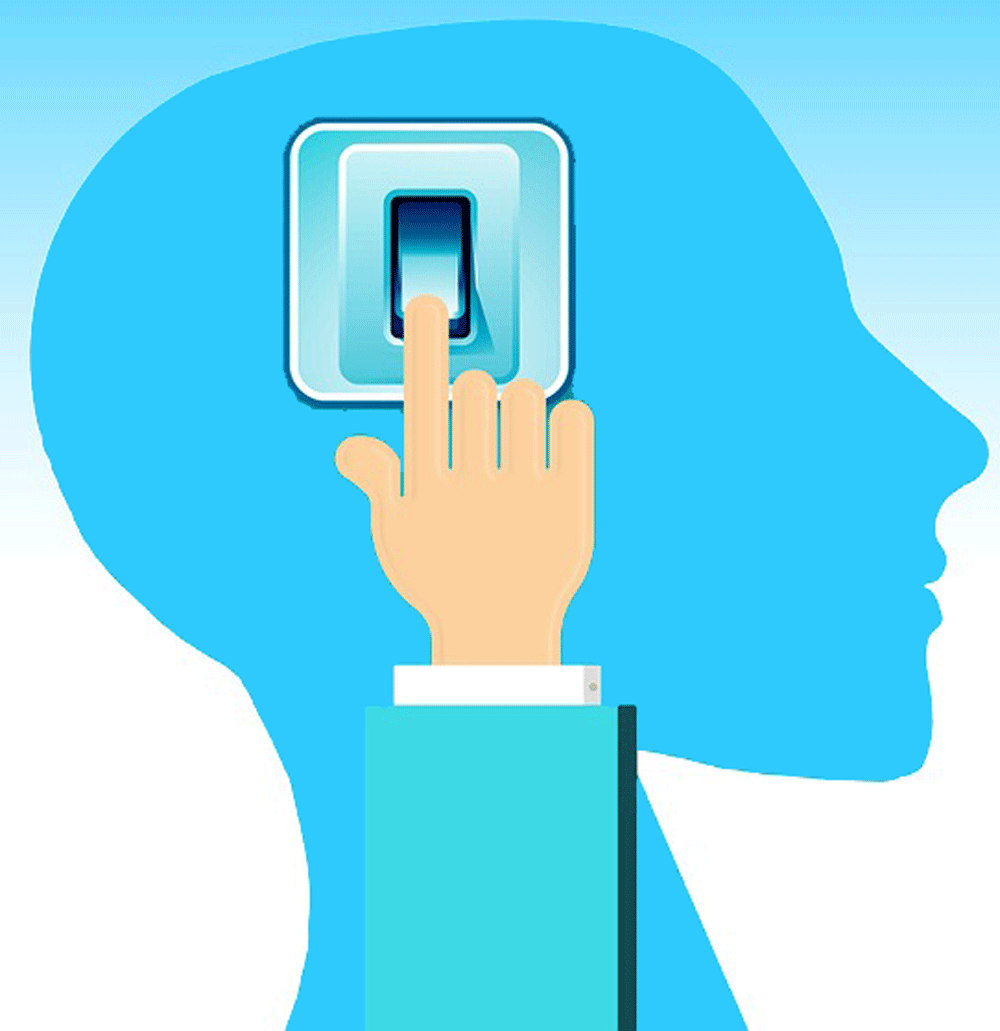
«Sin emoción no hay curiosidad, no hay atención, no hay aprendizaje, no hay memoria». Francisco Mora

Los actuales avances en materia de neurociencia están permitiendo entender mejor el funcionamiento del cerebro, este vastísimo campo de conocimiento, a día de hoy, tiene incidencia en áreas tan dispares como la economía, la industria o la educación; de ahí que la neuroarquitectura, el neuromarketing, o la neuropsicología, estén ganando posiciones. Es innegable: lo “neuro” está creando tendencia, tanto es así que ya se habla de neuromoda, neuropolítica, o neuroespiritualidad.

Ante este fenómeno no podemos por menos que preguntarnos si no estaremos asistiendo a una trivialización de esta disciplina científica. José Ramón Alonso, científico del INCYL, señala que “dado que toda actividad humana pasa por el cerebro, todo, también, es susceptible a encontrar una base neurocientífica».
 
PARA APRENDER, EMOCIÓNATE

Científicos y educadores están poniendo en marcha proyectos de investigación conjunta que pretenden explorar el punto de confluencia de la biología y la pedagogía. Asistimos, así, al nacimiento de un nuevo tiempo: la era de la neuroeducación. La neurociencia educativa aborda la inteligencia es su concepto multidimensional, en la que las emociones, la memoria y el aprendizaje, están estrechamente relacionados.

El investigador y neurocientífico Francisco Mora, afirma que la emoción juega un papel esencial en el proceso de aprendizaje, ya que “sólo se puede aprender aquello que se ama”. “El binomio emoción-cognición —añade— es indisoluble, intrínseco al diseño anatómico y funcional del cerebro”. Queda cada vez más claro que nuestra capacidad de adquirir información es directamente proporcional a las emociones que ésta sea capaz de despertar en nosotros. Por ende, cuanto más frecuente sea dicha experiencia, más profundo será el aprendizaje.

La doctora Melanie Sekeres, investigadora de la Universidad Bauylor, asegura que “si queremos memorizar algo, tenemos que experimentar emociones, repetir y compartir la experiencia tantas veces como sea posible, y todo ello en el menor tiempo posible”. Además, añade: “reproducir activamente la información y compartirla con alguien genera un recuerdo gratificante”, este patrón es al que el cerebro da prioridad ya que la sociabilización es una actividad muy gratificante a nivel emocional.

 
C. Fernández
 
FUENTES:
Neuroeducación (Cristina Sáez)
BIOTMR
La Vanguardia

 

Mamen

 
««Without emotion, there would be no inquisitiveness, no concentration, no learning and no recall.»». Francisco Mora

Current advances in neuroscience are enabling us to better understand the functioning of the brain – nowadays this vast field of knowledge is impinging on areas as varied as economics, manufacturing and education. Thus we have seen neural architecture, neural marketing, and neuropsychology all becoming more popular in recent years. It is undeniable: neuroscience has become fashionable, so much so that we already talk about neuro-couture, political neuroscience, and neural spirituality.

In view of this trend we can not help but wonder if we will see a dumbing-down of this field of study. José Ramón Alonso, INCYL scientist, points out that «since all human activity is governed by the brain, everything, too, can be related back to neuroscience».
 
TO LEARN SOMETHING, ENGAGE YOUR EMOTIONS

Scientists and educators are now launching joint research projects that aim to explore the crossover between biology and education. We are therefore witnessing the dawn of a new age: the era of ‘educational neuroscience’. Educational neuroscience uses a multifaceted model of intelligence, wherein emotions, memory and learning are all closely intertwined.

The researcher and neuroscientist Francisco Mora says that emotion plays an essential role in the learning process, as «you can only learn what you love.» «The emotion-cognition pairing,» he adds, «is indissoluble and intrinsic to the anatomical and functional structure of the brain.» It is becoming clearer and clearer that our ability to acquire information is directly proportional to the emotions that it is capable of awakening in us. Therefore, the more frequent this experience is, the deeper the learning will be.

Dr. Melanie Sekeres, researcher at Bauylor University, says that «if we want to memorize something, we have to experience emotions, repeat and share the experience as many times as possible, and do it all in the shortest possible time.» In addition, she adds: «actively reproducing the information and sharing it with someone else generates a rewarding memory», this pattern is what the brain gives priority to since socialization is a very rewarding activity on an emotional level.

 
C. Fernández
 
FUENTES:
Neuroeducación (Cristina Sáez)
BIOTMR
La Vanguardia
 

Mamen

 
««Without emotion, there would be no inquisitiveness, no concentration, no learning and no recall.»». Francisco Mora

Current advances in neuroscience are enabling us to better understand the functioning of the brain – nowadays this vast field of knowledge is impinging on areas as varied as economics, manufacturing and education. Thus we have seen neural architecture, neural marketing, and neuropsychology all becoming more popular in recent years. It is undeniable: neuroscience has become fashionable, so much so that we already talk about neuro-couture, political neuroscience, and neural spirituality.

In view of this trend we can not help but wonder if we will see a dumbing-down of this field of study. José Ramón Alonso, INCYL scientist, points out that «since all human activity is governed by the brain, everything, too, can be related back to neuroscience».
 
TO LEARN SOMETHING, ENGAGE YOUR EMOTIONS

Scientists and educators are now launching joint research projects that aim to explore the crossover between biology and education. We are therefore witnessing the dawn of a new age: the era of ‘educational neuroscience’. Educational neuroscience uses a multifaceted model of intelligence, wherein emotions, memory and learning are all closely intertwined.

The researcher and neuroscientist Francisco Mora says that emotion plays an essential role in the learning process, as «you can only learn what you love.» «The emotion-cognition pairing,» he adds, «is indissoluble and intrinsic to the anatomical and functional structure of the brain.» It is becoming clearer and clearer that our ability to acquire information is directly proportional to the emotions that it is capable of awakening in us. Therefore, the more frequent this experience is, the deeper the learning will be.

Dr. Melanie Sekeres, researcher at Bauylor University, says that «if we want to memorize something, we have to experience emotions, repeat and share the experience as many times as possible, and do it all in the shortest possible time.» In addition, she adds: «actively reproducing the information and sharing it with someone else generates a rewarding memory», this pattern is what the brain gives priority to since socialization is a very rewarding activity on an emotional level.

 
C. Fernández
 
FUENTES:
Neuroeducación (Cristina Sáez)
BIOTMR
La Vanguardia
 

Mamen

 
««Without emotion, there would be no inquisitiveness, no concentration, no learning and no recall.»». Francisco Mora

Current advances in neuroscience are enabling us to better understand the functioning of the brain – nowadays this vast field of knowledge is impinging on areas as varied as economics, manufacturing and education. Thus we have seen neural architecture, neural marketing, and neuropsychology all becoming more popular in recent years. It is undeniable: neuroscience has become fashionable, so much so that we already talk about neuro-couture, political neuroscience, and neural spirituality.

In view of this trend we can not help but wonder if we will see a dumbing-down of this field of study. José Ramón Alonso, INCYL scientist, points out that «since all human activity is governed by the brain, everything, too, can be related back to neuroscience».
 
TO LEARN SOMETHING, ENGAGE YOUR EMOTIONS

Scientists and educators are now launching joint research projects that aim to explore the crossover between biology and education. We are therefore witnessing the dawn of a new age: the era of ‘educational neuroscience’. Educational neuroscience uses a multifaceted model of intelligence, wherein emotions, memory and learning are all closely intertwined.

The researcher and neuroscientist Francisco Mora says that emotion plays an essential role in the learning process, as «you can only learn what you love.» «The emotion-cognition pairing,» he adds, «is indissoluble and intrinsic to the anatomical and functional structure of the brain.» It is becoming clearer and clearer that our ability to acquire information is directly proportional to the emotions that it is capable of awakening in us. Therefore, the more frequent this experience is, the deeper the learning will be.

Dr. Melanie Sekeres, researcher at Bauylor University, says that «if we want to memorize something, we have to experience emotions, repeat and share the experience as many times as possible, and do it all in the shortest possible time.» In addition, she adds: «actively reproducing the information and sharing it with someone else generates a rewarding memory», this pattern is what the brain gives priority to since socialization is a very rewarding activity on an emotional level.

 
C. Fernández
 
FUENTES:
Neuroeducación (Cristina Sáez)
BIOTMR
La Vanguardia
 

Mamen

Uso de cookies

Este sitio web utiliza cookies para que usted tenga la mejor experiencia de usuario. Si continúa navegando está dando su consentimiento para la aceptación de las mencionadas cookies y la aceptación de nuestra política de cookies, pinche el enlace para mayor información. ACEPTAR

Aviso de cookies